Accessibility
Art Not Shame is a community arts hub in Guelph grounded in disability justice principles and the social model of disability, which understands disability as created by environmental, attitudinal, and systemic barriers rather than individual impairment. Accessibility is embedded as a core design principle across the organization’s physical space, programming, and community practices, rather than treated as a compliance requirement under AODA.
The organization actively works to recognize, remove, and prevent barriers for people with disabilities through both infrastructure and practice, informed by ongoing community consultation and lived experience.
Art Not Shame has also participated in accessibility-focused community mapping and advocacy work, including contributions aligned with Access Now accessibility documentation and awareness efforts, helping to highlight both accessible and inaccessible spaces within Guelph while actively working toward expanding access locally. The organization has also engaged in ongoing dialogue and collaboration within Guelph’s accessibility ecosystem, including connection to the Guelph Barrier Free Committee’s broader accessibility conversations.
Types of Barriers Addressed

Physical and Architectural Barriers
Art Not Shame has intentionally built one of the most access-forward community arts spaces in Ontario, exceeding AODA requirements in multiple areas. The space includes three height-adjustable sinks, designed to support wheelchair users and individuals of varying heights and mobility needs. These sinks are part of a broader design approach prioritizing independent use and barrier-free participation.
The washroom is fully accessible and includes features beyond minimum standards, including a bariatric accessible toilet, an adult-sized change table, sharps disposal, and sufficient spatial clearance for mobility devices. Doorways exceed standard AODA width requirements to support easier movement through the space, and cabinetry throughout the facility uses accessible lower placements and service-style drawer pulls to support users with varied mobility and dexterity needs.
Together, these elements reflect a commitment to anticipatory design rather than retrofitted accessibility.

Sensory, Communication, and Cognitive Barriers
The organization also addresses sensory and communication-related barriers through the integration of sensory tools and adaptive supports throughout programming. This includes tools that support emotional regulation, sensory modulation, and participation for neurodivergent community members and individuals with sensory processing differences.
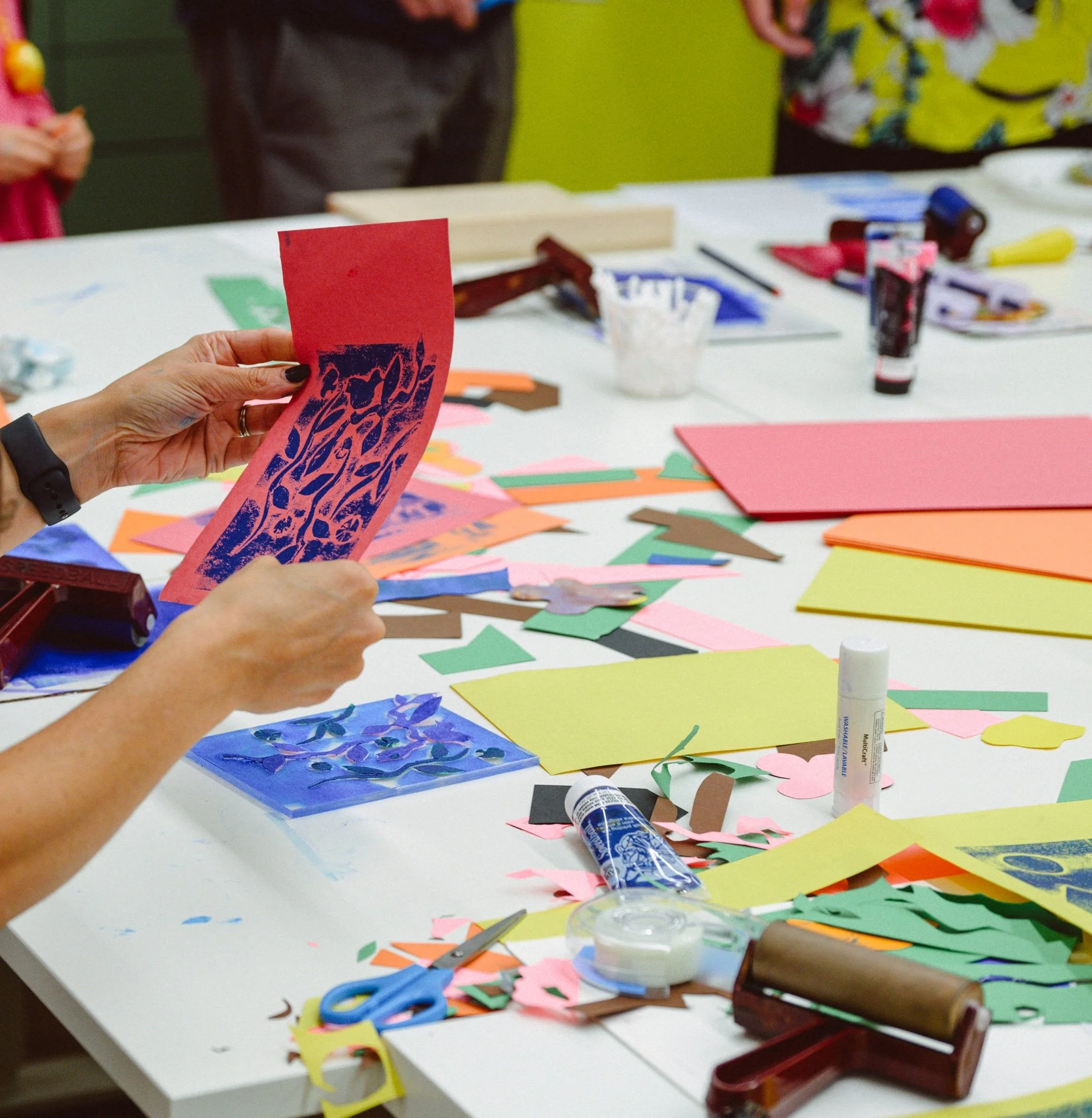
Art programming is intentionally designed to be flexible and low-barrier, allowing participants to engage without performance pressure, fixed outcomes, or required skill levels. Adaptive art tools and modified workshop formats ensure participation is possible for individuals with a wide range of cognitive, sensory, and physical needs.
Communication practices prioritize plain language, clarity, and accessibility, informed by ongoing participant feedback.

Attitudinal and Social Barriers
Art Not Shame actively challenges attitudinal and social barriers that exclude disabled people from arts and community spaces. The organization prioritizes inclusion, dignity, and belonging, creating an environment where people are not expected to justify their access needs or conform to able-bodied norms of participation.
This approach is grounded in disability justice values, emphasizing that access is relational and collective, not individual accommodation.
“A Disability Justice framework understands that all bodies are unique and essential, that all bodies have strengths and needs that must be met.”